Thursday, July 28, 2016

Wednesday, July 27, 2016
GST Constitutional Act 2016
What is GST! Why is it so Loud! What is in it for the Common Man!
Here we go, to walk through the Act.
'Goods and services tax would be levied and collected at each stage of sale or purchase of goods or services based on the input tax credit method. This method allows GST-registered businesses to claim tax credit to the value of GST they paid on purchase of goods or services as part of their normal commercial activity.'
The catch here being, Taxable Goods and Services are not distinguished from one another and are taxed at a single rate in a supply chain till the goods or services reach the consumer. Supply chain, terming the life of a Good or Service from the point of existence till consumption or service.
As stated by pro's, GST would help in clubbing the State and Central level taxes to a single factor reducing the stress on Tax calculation and complex understanding of the structures at different levels and would simplify the facilitation of Single Common Market concept, also helping the de-burdening of the tax on goods which is currently estimated to be around an average of 25% overall.
There are many features of the GST Act, which we would refrain from feeding into our brains for now :)
How it started and where are the roots!!
The thought to introduce a national-level Goods and Services Tax (GST) by April 1, 2010 was first mooted in the Budget Speech for the financial year 2006-07. This responsibility was headed through preparing a Design and Road Map for the implementation of GST was assigned to the Empowered Committee of State Finance Ministers (EC). The committee released its First Discussion Paper on GST in India on the 10th of November, 2009. Dr. Nandan Nilekani has also played an empowered role in development of IT(information Technology) systems for GST.
One most accepted reason for the delay being the ambiguity on the sharing of burden between States and Central. The Goods and Service Tax Bill or GST Bill, officially known as "The Constitution (122nd Amendment) Bill, 2014", would be a Value added Tax (VAT) to be implemented in India, from April 2016, which we believe would be effective from July, 2016.
India is not the only country implementing GST, India is among the flock consisting Australia, Canada, Hong Kong, New Zealand, Singapore, United Kingdom(then)
Important catch being, may be a tribute to the legendary, The Rocket Man! Dr. Avul Pakir Jainulabdeen "A. P. J." Abdul Kalam remembering people's president, the GST Constitutional Act Amendments is approved by Cabinet(India) on 27th July.
*Disclaimer - Opinions expressed for knowledge share only. Not to be offended.
Sunday, January 24, 2016

Wednesday, January 26, 2011
MicroFinance is all about....!!
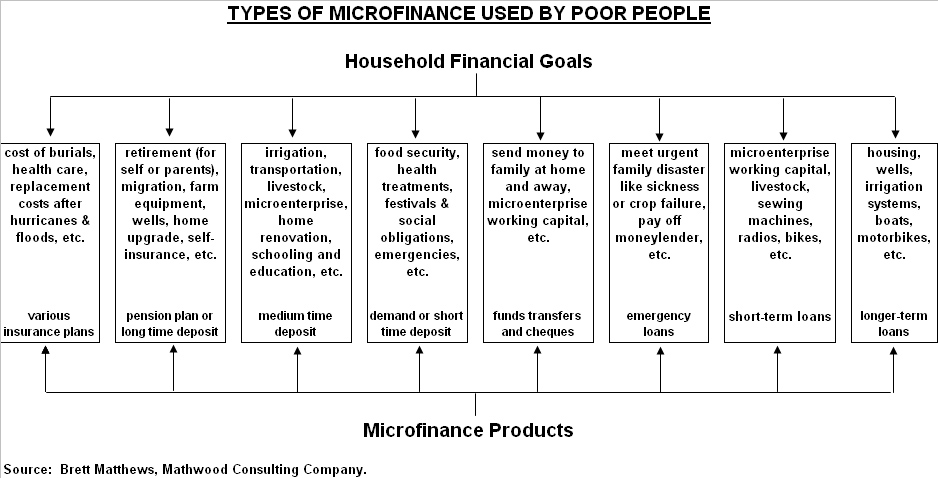
More broadly, it is a movement whose object is "a world in which as many poor and near-poor households as possible have permanent access to an appropriate range of high quality financial services, including not just credit but also savings, insurance, and fund transfers." Those who promote microfinance generally believe that such access will help poor people out of poverty.
BOUNDARIES AND PRINCIPLES
Poor people borrow from informal moneylenders and save with informal collectors. They receive loans and grants from charities. They buy insurance from state-owned companies. They receive funds transfers through formal or informal remittance networks. It is not easy to distinguish microfinance from similar activities. It could be claimed that a government that orders state banks to open deposit accounts for poor consumers, or a moneylender that engages in usury, or a charity that runs a heifer pool are engaged in microfinance.
CURRENT SCALE OF MICROFINANCE OPERATIONS
No systematic effort to map the distribution of microfinance has yet been undertaken. A useful recent benchmark was established by an analysis of 'alternative financial institutions' in the developing world in 2004. The authors counted approximately 665 million client accounts at over 3,000 institutions that are serving people who are poorer than those served by the commercial banks. Of these accounts, 120 million were with institutions normally understood to practice microfinance. Reflecting the diverse historical roots of the movement, however, they also included postal savings banks (318 million accounts), state agricultural and development banks (172 million accounts), financial cooperatives and credit unions (35 million accounts) and specialized rural banks (19 million accounts).
OTHER CRITICISMS
Most criticisms of microfinance have actually been criticisms of microcredit, delivered in the absence of other microfinance services such as savings, remittances, payments and insurance.
For example, there has been much criticism of the high interest rates charged to borrowers. The real average portfolio yield cited by the sample of 704 microfinance institutions that voluntarily submitted reports to the MicroBanking Bulletin in 2006 was 22.3% annually. However, annual rates charged to clients are higher, as they also include local inflation and the bad debt expenses of the microfinance institution.[38] Muhammad Yunus has recently made much of this point, and in his latest book argues that microfinance institutions that charge more than 15% above their long-term operating costs should face penalties.
Milford Bateman, the author of Why Doesn't Microfinance Work?, argues that microcredit offers only an "illusion of poverty reduction".
To read & know completely(78KB) click here
Tuesday, January 25, 2011
The Secret of My Success......... Christopher Reeve

Acting role as Superman
"What is the secret of my success?" This is something we often hear from wealthy or famous people, usually in response to an interview question.
What follows is sometimes interesting, sometimes predictable. However, when the late Christopher Reeve discussed the secret of his success, he moved his audience to tears.
How do you define success?
In his excellent book: "Fast Food Nation", Eric Schlosser recalls going with a fast-food chain manager, and some of his employees, to an event entitled "success". It was a large-scale event with big-name speakers, all giving advice or encouragement for an eager audience. All seemed hungry for success and it's hardly surprising that the words "success" and "wealth" seemed almost synonymous.
Speaker after speaker addressed the audience. Each was making the link between money and success until finally, accompanied by the theme tune from the film "Chariots of Fire", actor Christopher Reeve was wheeled onto the stage. Despite his tragic physical condition, Reeve talked clearly, though with pauses to allow his respirator to work.
He thanked the audience for their welcome and began by explaining that he donates his speaking fees to groups that conduct spinal cord research. This set the tone for what was to follow....
The Secret of My Success......"None of it Matters"
Famous for his acting role as Superman, Christopher Reeve was critically injured by a riding accident in 1995. This accident left him fighting for life and permanently paralyzed. Reeve had often been asked: "what is the secret of my success", but tragically his answer was totally different now. Schlosser recounted that, in the midst of what had been a non-stop celebration of wealth-related success, Reeve hushed the crowd with some thoughtful words.......
Click here to read full (38.6KB): Download the pdf
Friday, January 15, 2010
ASUS Launches P320 PDA Phone
What's really great though is the fact that the PDA phone incorporates every function you'd need or want, and does throws it all into a small, light and user-friendly package.
Edward Wang, Head Mobile Communications ASUS, said "India is growing as a big market for PDA's and Smartphone's, and that is the reason why the ASUS P320 is designed stylishly and is by far the smallest ASUS PDA—economically priced at Rs 12,900 so that more people can get to use a PDA. The future is smart phones"
As far as the future is concerned, Wang said that ASUS is very keen on equipping their PDA's with their second generation interface called ASUS Glide. Future plans also include its own chain of ASUS Experience stores, and dedicated service centres, which will be launched in the metros soon. ASUS is clear about sticking with Windows mobile for future products as well, so those looking for alternate OSes are out of luck.
James Cameron's Avatar: The Game
.jpg)
.jpg)
Let me take a brief detour and skim through the premise of Avatar. After having discovered an alien world, the humans start aggressively mining the moon for a mineral called Unobtanium, which fetches a hefty price back home. However, Pandora has more than just deposits of minerals—the moon is lush with thick vegetation, sentient plants, animals and even sapient beings called the Na’vi.
Read More
Google releases Android 2.1

Sunday, January 3, 2010
Transparent Electronics

The chip, known as (TRRAM) or transparent resistive random access memory, is similar to existing chips known as (CMOS) or metal-oxide semiconductor memory, which we use in our electronic devices. The difference is that TRRAM is completely clear and transparent. What is the benefit of having transparency?
"It is a new milestone of transparent electronic systems," says Jung Won Seo. "By integrating TRRAM with other transparent electronic components, we can create a total see-through embedded electronic systems."
The technology could enable the windows or mirrors in your home to be used as computer monitors and television screens.
This technology is expected to be available within 3 to 4 years.
Universal Notebook Adapter

Huntkey 90W Energy Star is a high-efficiency adapter for notebooks. An Energy Star-V product, with conversion efficiency up to 87%, saves power as much as you expect. It includes 10 different notebook tips for compatibility with a wide variety of leading notebook brands.
Read more
Monday, November 16, 2009
PATENT RIGHTS
The term at this point is 20 years from the date your application is filed with the USPTO, of course, as always, with some exceptions. There are almost always exceptions, especially when the Government is looking for money or trying to cover something up. (Soapbox statement) This term only applies to the US and it’s territories and possessions. (Iraq? Not there yet).
The right granted is --- “the right to exclude others from making, using, offering for sale, or selling” the invention in the US - or - “importing” the invention into the US. Notice the word “exclude” above. The code doesn’t give the inventor the right to make, use, sell, etc. - it gives him or her the right to EXCLUDE OTHERS from doing it.
In certain instances this may have some meaning - best left to the attorneys (and one more reason why you need help with your invention).
Some people - maybe even you - confuse a patent with trademarks, and copyrights. Although there is some resemblance in the rights granted under these three different kinds of “intellectual property,” they are different, and serve different purposes.
COPYRIGHT - (notice the spelling, it’s a right - not a write)
A copyright protects an author against anyone copying his/her work. That means literary (book), dramatic (play), musical (song), and artistic (painting, photo) works. A copyright also covers in some instances performing and recording rights. Copyright is also a right granted through the Constitution.
One of the basic differences between a patent and a copyright is this:
- A copyright protects the form of expression of an idea (or subject matter of the work).
- In other words, if you described how a machine worked, how you described it in writing would be protected - but the actual machine (that was your idea) would not be protected.
- Other people could DESCRIBE the machine in their own way, and could make (etc.) the machine freely, UNLESS YOU ALSO HAD A PATENT ON THE MACHINE. The patent protects the idea.
Copyrights are registered in the Copyright Office in the Library of Congress.
TRADEMARK/SERVICEMARK
A trademark or servicemark (after this when I say trademark, it will include servicemark) relates to any word, name, symbol or slogan that is used in trade with goods or services, that is used to show where the goods or services came from, and to distinguish them from others.
Trademarks are used so that the public or consumer is not confused as to where or who the product or service came from. A trademark does not stop anyone from using or selling the same goods or services - they just can’t use the same name - or one that is similar to someone else - at least close enough to confuse the public.
Trademarks do not protect ideas - only how you market your idea (product). Trademarks are also not granted by the US Constitution. they are a product of commerce - and started with the various artisan guilds that would identify their creations with a “mark” somewhere on the product. Look at a piece of silverware or pottery to see what I mean.
There you have the basic differences between patents, trademarks and copyrights - all “intellectual properties.” Just remember,
- copyrights protect the expression of an idea
- patents protect the idea itself (with some restrictions)
- and trademarks protect the symbol that you use to market your idea finished into a commercial product.
The law specifies what subject matter is covered by patents and the conditions that have to be met - which is all controlled by the USPTO. Those requirements will be touched on in other pages on this site. Keep tuned - bookmark please - and come back.
for more info click here...
Most Advanced Microscope of World

 Canadian center for Electron Microscopy has developed a new powerful microscope that is world's most powerful microscope till date. According to Gianluigi Botton, Director of Canadian center for Electron Microscopy, says that the power of this microscope can be thought as equivalent to "taking Hubble Telescope and aiming it at atomic level".
Titan 80-300 Cubed
This powerful microscope named Titan 80-300 Cubed was installed at the University early in the summer, and since then it has been put through its paces to achieve unprecedented resolution.
This microscope is so powerful that it can easily identify atoms, measure their chemical state and even probe the electrons that bind them together.
According to vice-president of Mc Master, Mr. Elbestawi this microscope will make McMaster a hub for a fast growing field.
Really Impressive Microscope
A group of international scientists who visited McMaster were really impressed by the amazing capabilities of this microscope. This microscope can help scientist to discover new things in biological and physical sciencesDean of Engineering David Wilkinson sees the microscope through another lens.
Titan's ability can probe structure of solid materials to the atomic level and this will have an amazing impact on development and commercialization of new technologies from biomedical devices to water quality monitoring and improved energy storage systems.
Cost of Microscope
This microscope has been build in Netherlands by FEI Company with a cost of about $15 million. This microscope can help to examine everyday products with its Nano details that can improve the efficiency of these products.
What This Microscope Can Do?
This microscope can be used to produce more efficient lighting and better solar cells, to study proteins and drug-delivery materials to target cancers. It will assess atmospheric particulates, and help create lighter and stronger automotive materials, more effective cosmetics, and higher density memory storage for faster electronic and telecommunication devices.
3-Dimensional Computer Processor
This can be said as the next major advance in computer processors technology. The latest 3-D processor is running at 1.4 gigahertz in the labs of University.
PAST ATTEMPTS VS LATEST RESEARCH
In the past attempts of making 3-D chips, scientist were just making a stack of regular processors. But at University of Rochesterb it was designed and built specifically to optimize all key processing functions vertically, through multiple layers of processors, the same way ordinary chips optimize functions horizontally.
This design means that every tasks such as Synchronicity, Power Distribution, and Long-Distance Signaling are all fully functioning in three dimensions for the first time.
EBY FRIEDMAN: THE MAN BEHIND 3-D CHIPS
Eby Friedman and his students has designed this chip, which uses many of the tricks of regular processors, but also accounts for different impedances that might occur from chip to chip, different operating speeds, and different power requirements. According to Eby Friedman, Professor of Electrical and Computer Engineering at Rochester and faculty director of the pro of the processor says:- "I call it a cube now, because it's not just a chip anymore. This is the way computing is going to have to be done in the future. When the chips are flush against each other, they can do things you could never do with a regular 2D chip"
TODAYS INTEGRATED CHIPS AND PROBLEMS
The problem with today's technology of integrated circuits is that, beyond a limit it is impossible to pack more chips next to each other which limits the capabilities of future processors. So number of integrated circuit designers anticipate someday expanding into the third dimension, stacking transistors on top of each other.
IMPORTANCE
Vertical Expansion of chips has lots of technical difficulties and the only solution to this is to design a 3-D chip where all the layers interact like a single system. According to Friedman: Getting all three levels of the 3-D chip to act in harmony is like trying to devise a traffic control system for the entire United States-and then layering two more United States above the first and somehow getting every bit of traffic from any point on any level to its destination on any other level-while simultaneously coordinating the traffic of millions of other drivers.
Now if we replace the two United States layers to something more complicated like China and India where the driving laws and roads are quite different, and the complexity and challenge of designing a single control system to work in any chip begins to become apparent.
The 3-D Chip is essentially an entire circuit board folded up into a tiny package. With this technology the chips inside something like an iPod could be compacted to a tenth their current size with ten times the speed.
VULTURE - Unmanned Aircraft
 Defense Advanced Research Projects Agency (DARPA) of United States is working to develop an unmanned aircraft that is able to stay in air for a period of 5 years at a time. It is one of the most recent inventions of world.
Officials of DARPA has revealed that this aircraft will be known as VULTURE due to its Persistent Pseudo-Satellite Capability . It means that this aircraft will be able to fly over a single area, communicating or performing analysis for years at a time.
Major Obstacles in Project:
Even this project looks appealing to many of you, but there are some serious problems or you can say obstacles in achieving this project.
1) First challenge in front of designers is to figure out some Way to Supply Power to this aircraft during long missions.
2) Another problem is that this aircraft will carry a 1000 pound (450 kg) payload in winds at an altitude of 60,000 to 90,000 feet.
3) Designers have also to sort out the problems regarding Deterioration of Materials during their long-time exposure to stratospheric flight.
In addition to this there may be many challenges during designing of this aircraft.
Daniel Newman: The Man Behind VULTURE
Daniel Newman is the Project Manger of this ambitious project of NASA. In his words: "We want to completely change the paradigm of how we think of aircraft. Aviation has a perfect record - we've never left one up there. We will attempt to break that record". It looks that its time to get out of the traditional "launch - recover - maintain - launch cycle of aircrafts."
Concept Behind Vulture:
Basically Aircrafts operates just like satellites, but the major difference is that these are not regulated by orbital mechanics. You can understand Vulture as a Pseudo-Satellite, which operates in the stratosphere and not in the low Earth orbit. This would provide a 65 dB upgrading in communications capability and will increase onboard sensor resolution.
When Will it Become a Reality?
Well, right now NASA has not mentioned any time table when the aircraft will be ready. But for now NASA has worked on the probable design of Vulture (see picture).
4G TECHNOLOGY
4G also called as Fourth-Generation Communications System, is a term used to describe the next step in wireless communications. A 4G system can provide a comprehensive IP solution where voice, data and streamed multimedia can be provided to users on an "Anytime, Anywhere" basis. The data transfer rates are also much higher than previous generations.
The main objectives of 4G are:
1)4G will be a fully IP-based integrated system.
2)This will be capable of providing 100 Mbit/s and 1 Gbit/s speeds both indoors and outdoors.
3)It can provide premium quality and high security.
4)4G offer all types of services at an affordable cost.
4G is developed to provide high quality of service (QoS) and rate requirements set by forthcoming applications such as wireless broadband access, Multimedia Messaging, Video Chat, Mobile TV, High definition TV content, DVB, minimal service like voice and data, and other streaming services.
4G technology allow high-quality smooth video transmission. It will enable fast downloading of full-length songs or music pieces in real time.
The business and popularity of 4Gmobiles is predicted to be very vast. On an average, by 2009, this 4Gmobile market will be over $400B and it will dominate the wireless communications, and its converged system will replace most conventional wireless infrastructure.
Data Rates For 4G:
The downloading speed for mobile Internet connections is from 9.6 kbit/s for 2G cellular at present. However, in actual use the data rates are usually slower, especially in crowded areas, or when there is congestion in network.
4G mobile data transmission rates are planned to be up to 20 megabits per second which means that it will be about 10-20 times faster than standard ASDL services.
In terms of connection seeds, 4G will be about 200 times faster than present 2G mobile data rates, and about 10 times faster than 3G broadband mobile. 3G data rates are currently 2Mbit/sec, which is very fast compared to 2G's 9.6Kbit/sec.
X-mini Speakers

we featured the unboxing galleries of the two XMI X-mini portable speakers which we received from Singapore. After having tried and tested its features and even used it while on the road, we were overall well impressed with the X-mini II Capsule Speaker and the X-mini MAX II portable speaker. If you haven’t yet heard about them before, we strongly advise you first read about their details and see the photos here and here…
for more information click on the link below
http://www.gadgetlite.com/2009/11/16/review-xmi-x-mini-ii-capsule/
gadgets

Packard Bell announced last week their first Freeview certified TV-ready PCs, both the oneTwo series M and L models will be integrated with Freeview certified digital TV tuner in the UK.
The latest Packard Bell oneTwo series is designed to procure a maximum amount of enjoyment with a minimal amount of effort, by bringing together the technology in a friendly interface. This all-in-one device, with its space-saving design and a single power-cord combines a PC and a TV in a 20’’ or 23’’ display. Both models will boast touchscreens, compliant and optimised for Windows 7. More info on their specs and pricing below.
http://www.gadgetlite.com/2009/11/16/latest-packard-bell-onetwo-series/
Sunday, July 26, 2009
ELECOM 10 port USB
 I’ve never really had a ton of USB items that needed plugged in, but even with as few as I have, it can be extremely frustrating when you run out of ports. Then you get an extra hub and of course, that one fills up eventually. So although you may not really need 10 different USB ports, you’re just giving yourself the option to have a lot plugged in at once. It’s always better to have too many USB ports rather than too few.
sony aims big with line of mega changers
 Sony is looking far into the future to further consolidate their position as one of the better home entertainment system manufacturers for the average consumer electronics market by rolling out a whole new bunch of devices, where these will include the new BDP-CX960 and the “Elevated Standard” (ES) BDP-CX7000ES 400-disc Blu-ray Disc MegaChangers. In addition, the BDP-S1000ES single disc ES player has also been announced, bringing Sony’s Blu-ray Disc line to 13 models. Just in case you were wondering how “mega” is a MegaChanger, the Blu-ray Disc MegaChanger models are able to store and play a whopping 400 Blu-ray Discs, DVDs, and CDs, letting you relocate your entire disc library to a convenient, easy-to-access location - sure as heck frees up more space on those shelves of yours to hold even more discs, if you’re so inclined.